


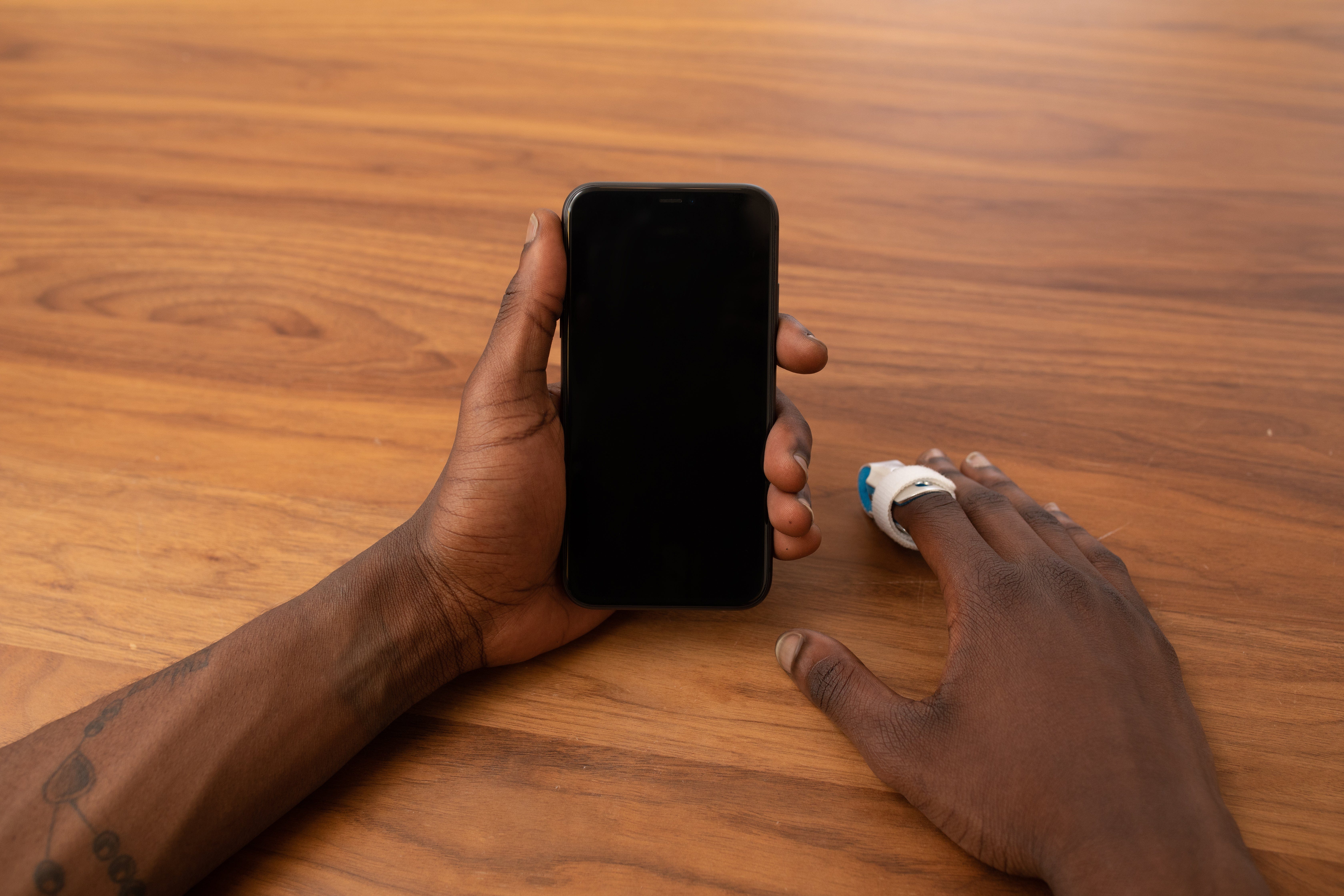
This is not a story about one bad nurse, one careless doctor, or one hospital that failed to care. It is a story about what happens when a device becomes so ordinary that its limitations disappear from view.
You have seen it: the small clip on the fingertip, the glowing number on the monitor. We call it a pulse oximeter. It is useful. It is fast. It is everywhere.
And that is exactly why its limits matter.
A pulse oximeter estimates oxygen levels by passing light through the skin. But skin is not neutral to light. Research has shown that these devices can overestimate oxygen levels in people with darker skin. That means a Black or Brown patient may appear “okay” on the monitor while their body is not getting enough oxygen.
The monitor may say ninety-five. The body may be much lower. The patient looks fine on the screen and is not fine in the bed.
This is not a fringe concern. A 2020 New England Journal of Medicine study found that Black patients had nearly three times the rate of occult hypoxemia compared with White patients. Occult hypoxemia means the pulse oximeter looks reassuring while the true oxygen level is dangerously low.
Other studies during and after the COVID-19 pandemic raised similar concerns. In 2025, the FDA issued draft guidance calling for stronger testing of pulse oximeters across skin tones. That is progress. It also means the problem was real enough to require regulatory attention.
Now sit with what this means inside a single hospital room.
Now sit with what this means inside a single hospital room.
The clinician may be acting in good faith. The family may be telling the truth. The patient may be clearly describing distress. Everyone in the room may be doing what they were taught to do.
And danger can still hide in plain sight, because the system has trained people to trust the number more than the person.
That is the part worth naming. The failure is not always cruelty. Sometimes the failure is a hierarchy of trust. The reading on the screen is treated as fact. The words from the patient are treated as feeling. So when the two disagree, the screen wins.
A daughter says her father does not look right. A patient says he cannot catch his breath. Someone glances at a number that says ninety-five and offers reassurance instead of escalation.
This is how harm happens without a villain.
So this is the PSA:
If you are short of breath, say so plainly. Say it again if you are brushed aside. Do not assume the monitor knows something your body does not.
If you are with someone you love and they do not look right to you, trust that. Say what you see. Ask whether the number matches how they are actually breathing. Ask whether anything besides the finger reading should be checked.
There are ways to check oxygen more directly, including an arterial blood gas. That does not mean every patient needs one. It means that when the person and the monitor disagree, the person should not disappear behind the number.
And to clinicians: the monitor is a tool. The patient is the truth the tool is trying to estimate.
A reassuring number is not the same as a reassured body.
Believe the person.
The number is an estimate.
The person is the patient.
Further Reading
Sjoding MW, Dickson RP, Iwashyna TJ, Gay SE, Valley TS. Racial bias in pulse oximetry measurement. New England Journal of Medicine. 2020;383(25):2477-2478. doi:10.1056/NEJMc2029240.
Fawzy A, Wu TD, Wang K, et al. Racial and ethnic discrepancy in pulse oximetry and delayed identification of treatment eligibility among patients with COVID-19. JAMA Internal Medicine. 2022;182(7):730-738. doi:10.1001/jamainternmed.2022.1906.
Gottlieb ER, Ziegler J, Morley K, Rush B, Celi LA. Assessment of racial and ethnic differences in oxygen supplementation among patients in the intensive care unit. JAMA Internal Medicine. 2022;182(8):849-858. doi:10.1001/jamainternmed.2022.2587.
U.S. Food and Drug Administration. Pulse oximeters for medical purposes: non-clinical and clinical performance testing, labeling, and premarket submission recommendations. Draft guidance for industry and FDA staff. January 2025.
Wong AI, Charpignon M, Kim H, et al. Analysis of discrepancies between pulse oximetry and arterial oxygen saturation measurements by race and ethnicity and association with organ dysfunction and mortality. JAMA Network Open. 2021;4(11):e2131674. doi:10.1001/jamanetworkopen.2021.31674.
Henry NR, Hanson AC, Schulte PJ, et al. Disparities in hypoxemia detection by pulse oximetry across self-identified racial groups and associations with clinical outcomes. Critical Care Medicine. 2022;50(2):204-211. doi:10.1097/CCM.0000000000005394.